Drag to look around · Scroll to zoom
Summer studio · Budva, Montenegro
Work with Marko,
in person.
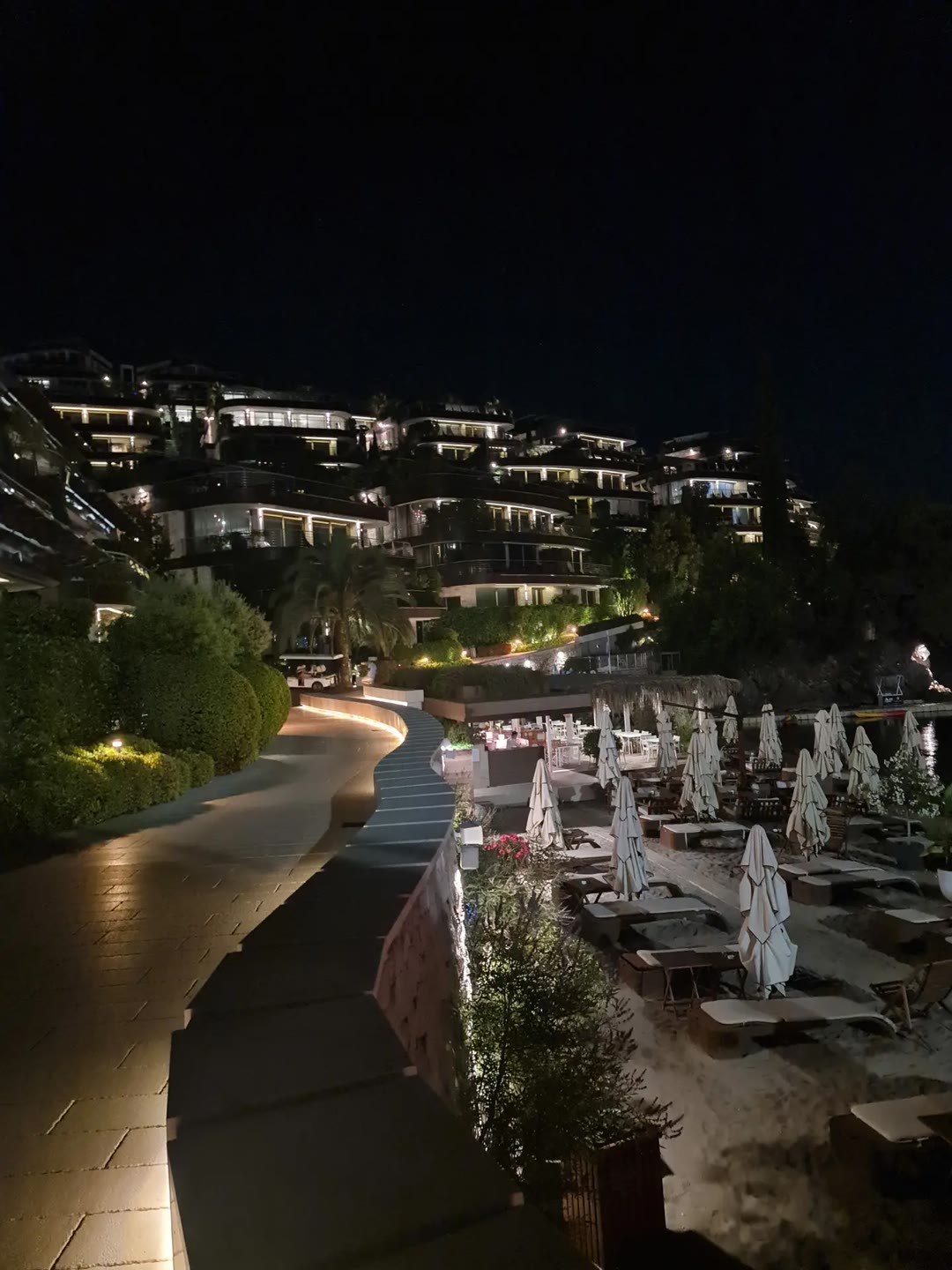
Each summer Marko works from a private studio above the sea in Budva. You come here, and the two of you work side by side at the same table, one on one, for as long as the work needs.
Reservations now open for June 2027
- I
Arrival
A car meets you at the airport, or we wait for you on the quay if you come by sea. Your luggage goes ahead; you go straight to the studio.
- II
The studio
A quiet room above the water, set up for the work and nothing else. Coffee in the morning, lunch on the terrace, the sea outside every window.
- III
With Marko
No account managers and no handovers. Marko sits with you, looks at what you have built and works through it with you, in the room, until it is right.
The studio
Above the bay,
facing Budva.
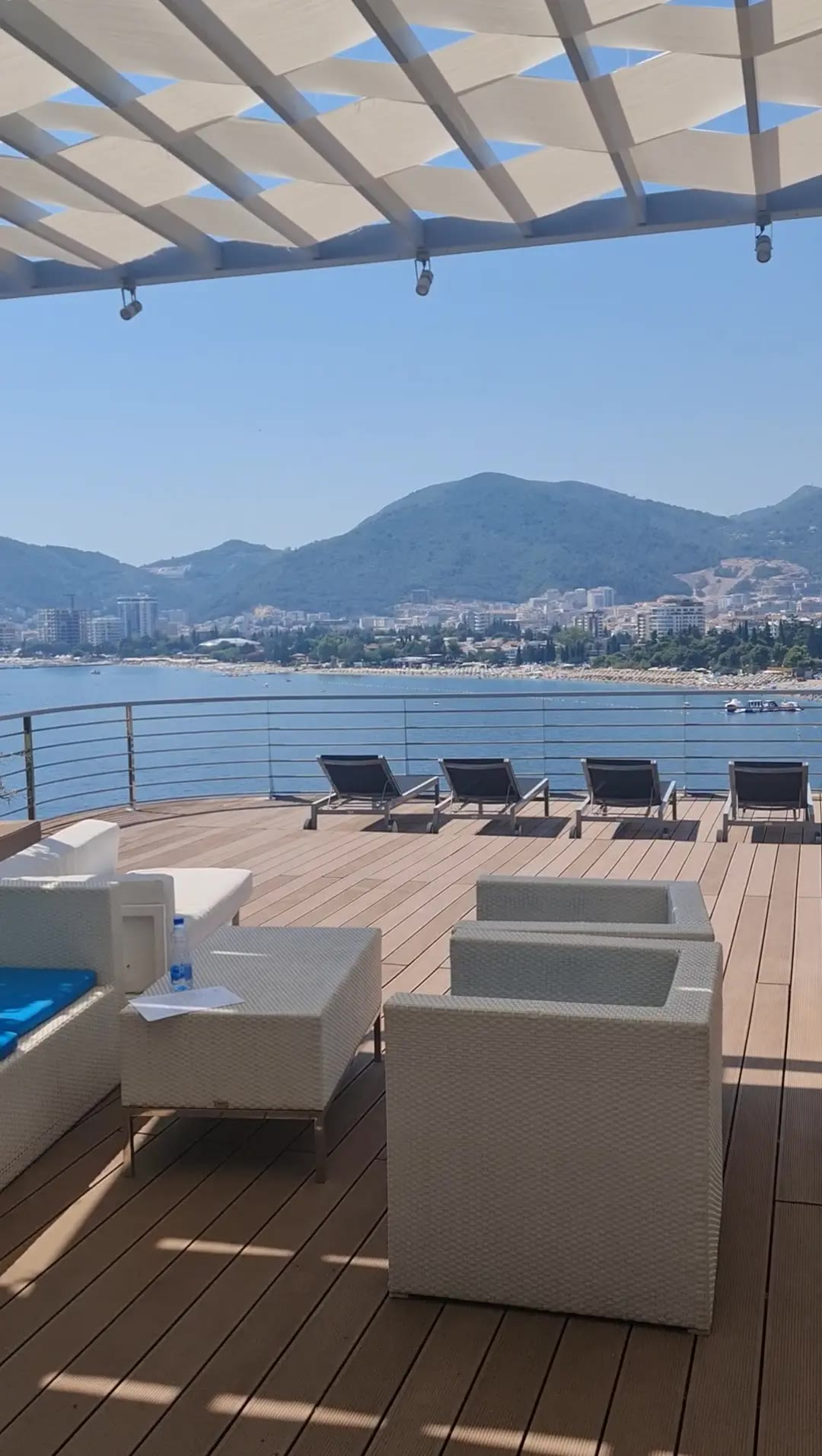
We work on a terrace over the water, under a pergola, with the whole of Budva and its mountains across the bay. Long tables for the work, deep chairs for the conversations in between, and the sea a few steps away when you need a break.
It is quiet, private and set up for one client at a time.
- TivatTIV · 25 minutes by car
- PodgoricaTGD · 1 hour by car
- DubrovnikDBV · 1 hour 45 minutes by car, one border
- By yachtStraight into Budva · we meet you on the quay
Reservations
June 2027
Marko works with very few clients each summer, so places are limited. Tell us when you would like to come and how you will arrive, and we will take care of the rest.
Taste is
the moat
The building was five-star. So were the rooms, the marble and the staff. The first thirty metres of the guest’s arrival were not, and the owner was the one person who couldn’t see it.
The client
A five-star hotel owned by a man who built his fortune in concrete. He started his career behind the wheel of a mixer truck, and he still drives better than anyone we know. The hotel itself was excellent: a striking building, a spotless interior, warm and attentive staff.
The problem
Five-star guests arrive in five-metre cars. An S-Class or a 7 Series is well over five metres long, and the hotel’s garage was built around a narrow ramp with a tight turn at the mouth.
On most days it was worse than tight. Locals stopping for a quick coffee left their cars across the approach, so a guest’s first minute at the hotel was a three-point turn, a wait, or giving up and parking on the street.
The owner couldn’t see any of it. He could thread a mixer truck through that entrance. His guests couldn’t, and they didn’t come back.
What we sold him
Not design. Taste. The idea that a five-star experience starts on the street, before the lobby, and that one small failure there undoes everything inside.
We drove the arrival ourselves in a long-wheelbase sedan, filmed real guests coming in, and put the footage in front of the owner. Then we redesigned the first thirty metres.
The changes
- 01A wider ramp mouth
We reshaped the entrance so a five-metre car can take it in one smooth line, without stopping to correct.
- 02A clear approach
Bollards and planters keep the approach free, and quick stops for coffee get their own short-stay bay a few metres away.
- 03A valet at the kerb
Guests who don’t want to park never have to. Someone meets the car, takes the keys and the luggage.
The rule
Either earn the stars or take them down. Owners spend millions on the building and the interior, then lose the guests they built it for on a detail nobody thought was their job. That detail is where taste shows, and it’s the part competitors find hardest to copy.
A five-star hotel needs a five-star arrival.
The ten-floor walk
Wards across the Western Balkans are running out of nurses. We found that a simple rule was costing them time on every shift, replaced it with a network of vetted volunteer runners, piloted it in one hospital and gave the model away as open source. We did it for free.
The problem
Over the last decade thousands of nurses from Serbia, Bosnia and Herzegovina and Montenegro have left for Germany and other Western European countries. The ones who stayed now cover more patients and more beds than any roster was built for.
At the same time, families bring things to patients every day: clean clothes, food, medicine from home, documents. Under current procedures a parcel can’t leave reception on its own. A nurse from the ward has to come down and collect it, even when the ward is on the tenth floor and she is the only one on shift.
What we found
When we mapped how nurses actually spend a shift, the walk to reception kept showing up. It was never in the job description and never counted, but it pulled the scarcest people in the building off the ward several times a day, for a task that needs no medical training at all.
The model
- 01Vetted runners
Unemployed people and students sign up as volunteers. Each one passes the same medical checks and hospital onboarding as other support staff.
- 02Wait at reception
Runners stay at the front desk. A family hands over the parcel, the runner logs it and carries it straight up to the ward desk.
- 03Families tip the run
Families give the runner €1 to €2 per delivery. The nurse never leaves the floor, and the runner earns from every trip.
One shift
Against local pay
Twenty days of runs earn a runner two to four times the average net monthly salary in each of the three countries.
Why we did it for free
We don’t only work for luxury clients. Part of our time goes to work for the public good, and this is one of those projects.
Nobody hired us for this. We charged the hospital nothing, and we didn’t keep the model to ourselves. We implemented it in one hospital in the Western Balkans first, and once it worked we published everything as open source, so any hospital in the region can adopt it for free and adapt it to its own wards and rules.
It’s our way of giving back to the community we work in every summer: the same countries whose nurses and patients this helps.
The best fix for a staff shortage was to give nurses their time back.
Catch the Yacht
Technohull, the Greek builder of high-performance boats, asked us for a gaming experience to launch their new Alpha 45. We put players at the helm and gave them two minutes to run down a superyacht.
The brief
Technohull builds fast, hard-riding boats at its shipyard in Lavrio, on the coast south-east of Athens. For the launch of the Alpha 45 they didn’t want another film of a hull jumping waves. They wanted people to feel the speed themselves, on the website and at the boat show stand.
The idea
Performance is easiest to believe when you’re the one at the throttle. So the game starts where the boats do: moored at the Technohull yard in Lavrio. A superyacht has just left the bay. You have two minutes to take the helm, catch her and hold position alongside.
The chase runs south down the channel between the mainland and Makronisos, past the Temple of Poseidon at Cape Sounion and out to open sea.
How it plays
- 01Take the helm
Walk the deck at the yard and step up to the wheel. The clock starts when you push the throttle.
- 02Run her down
Follow the target marker through the channel. The yacht holds 27 knots, so every wide turn costs you.
- 03Hold alongside
Match her speed and stay next to her to stop the clock. Your time goes on a leaderboard with your country’s flag.
In numbers
What we built
- Real-time 3D in the browser, with a sea that swells, catches the sun and throws foam
- The real route: Lavrio waterfront, the yard and its Greek flags, Makronisos and Cape Sounion
- Keyboard controls on desktop, touch throttle and steering on phones
- Chase and helm cameras, a course minimap and a target marker on the yacht
- A leaderboard with names and country flags, ready for the website and the stand
- Technohull’s own look throughout: black, white and signal red, under #redefineperformance
Two minutes at the helm sells a boat better than two minutes of video.
THE MOAT